EN
EN
 AR
AR
 FR
FR
 DE
DE
 IT
IT
 JA
JA
 KO
KO
 PT
PT
 RU
RU
 ES
ES


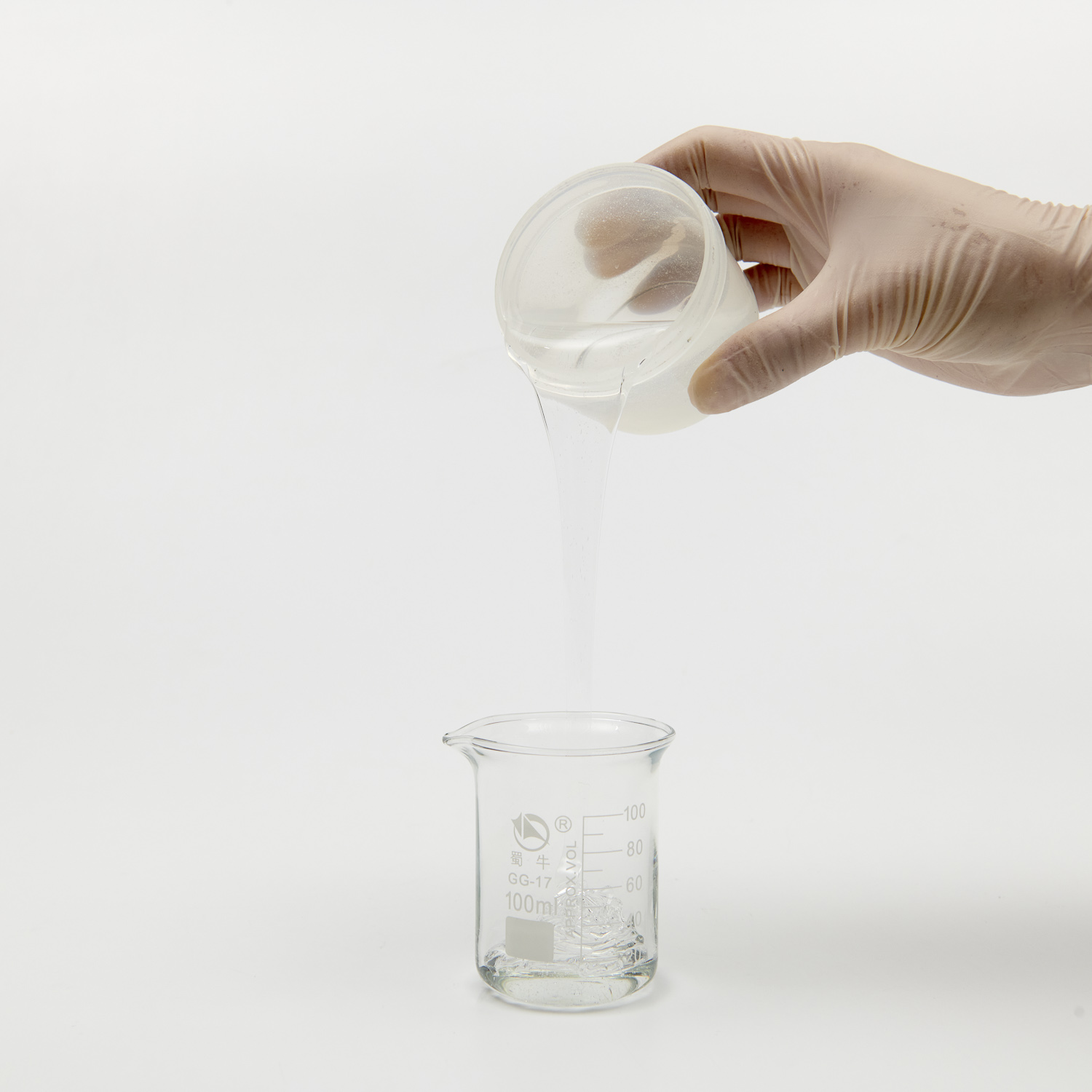
When working with PDMS (Polydimethylsiloxane), we note that this material has a singular unique property that other materials (e.g., epoxies or urethanes) do not offer. PDMS has a Young's modulus of less than 1 MPa. This property will allow PDMS to absorb dynamic strain, thereby enabling it to be utilized in devices that screen fold, or in stretch circuits, or other devices with big strain. PDMS also has a unique property of energy dissipation through viscous layer, enabling good adhesion for electronic circuits after more than 10,000 flex cycle in wearable biosensor applications. Also, PDMS has unique compressive property where it can be compressed 15% a day and still remain sealed. This valuable property of PDMS can be used for designing technologies for implantable medical devices (dowded in bio) as reliability of these devices is of utmost importance.
MEMS, sensors, and thin-film devices—conformal adhesion without interfacial stress.
PDMS directly contacts surfaces through molecular-level adhesion. PDMS does not peel, like traditional solvent-based glues. PDMS copies details of surfaces with a precision down to 20 mN/m. PDMS copies details with a precision down to the nanometer and forms tight seals around diaphragm MEMS components without warping. PDMS does well under extreme and varying temperatures between -40°C to 150°C due to its adhesion of 5 j/m². That makes PDMS great for automotive sensors. PDMS's Poisson's ratio is close to 0.5, this is an advantage over stiffer silicones. This property prevents unwanted peeling at flexible copper-polyimide connections. This is especially important for OLED displays. Standard materials cause a light output drop > 30% due to interface stress. PDMS maintains the electroluminescence, stablizing it throughout the life of the device. This makes PDMS a great choice for manufacturers that want long lasting devices.
Polydimethylsiloxane (PDMS) maintains a dielectric constant in the range of 2.3 to 2.8, for up to 1 MHz. This contrasts sharply with PVC, whose dielectric constant is 3.9 at just 50 Hz, and with most epoxy resins which are above 3. This excellent dielectric stability stems from the absence of dipole moment non-polar chains between PDMS and the dielectric. Therefore, the loss tangent is 0.001 and is approximately 10 times better than standard epoxy resins. This attribute of PDMS results in better signal integrity in high-frequency applications. Custom-built 5G antennas are enclosed with PDMS because PDMS is less signal reflective than rigid sealants.
Some flexible RF systems with signal reflections that were previously tested showed signal reflections that were 40% lower.
Thermal resilience (−60°C to 200°C) and UV/oxidation resistance in wearables and harsh-environment deployments.
Polydimethylsiloxane (PDMS) retains approximately 95% of its dielectric strength even after 500 temperature cycles from -60 °C to + 200 °C. Silicone materials begin to breakdown above 150 °C due to oxidation. PDMS has a high molecular weight with a completely saturated structure. PDMS has exceptional resistance to heat and UV damage. PDMS sealed photovoltaic connectors tested under intense UV radiation for 2000 hours lost less than 3% of their original light transmission. PDMS is a great choice for the most extreme monitoring systems in sensors in the Arctic. Most materials' performance is significantly impaired due to cracking, yellowing, and adhesion loss; PDMS is a great choice for high temperature oil sensors at 200 °C.
Sealing Flexibility of PDMS vs. Traditional Encapsulants in Real-World Applications of Dynamic Electronics
PDMS is far superior to traditional epoxy encapsulation materials in applications such as wearable technology and industrial robotics. Johnson Reliability Journal 2022 cites that materials other than PDMS have 25% of their industrial electronics failed due to stretching and compressing of seals. PDMS still provides seals after hundreds of thousands of bending motions to ensure their flexibility. PDMS works because of three critical properties of its chemical structure:
1. Dynamic Strain Absorption: PDMS elongates to 1000% of its original length while epoxies and other polymer adhesives have previous delamination of bonded joints at 5%. This permits PDMS to maintain its bond at vibration prone joints.
2. Thermal Cycling Integrity: PDMS maintains its elastomer bond to surfaces over -60C to +200C Thermal Cycling cycles; 50 cycles is the average failure point for acrylic adhesives.
3. Microgap Penetration: PDMS can fill voids smaller than 10 microns and penetrate gaps that other viscous urethanes cannot. For MEMS, this is a critical requirement to ensure the defection of moisture.
Data provided from PDMS-encapsulated automotive LiDAR components indicates that components have a 0.02% annual failure rate, which is five times lower than components encapsulated with silicone.
Why are the properties of PDMS so extraordinary? It absorbs kinetic energy, and is resistant to weathering, affording degradation from the elements and other factors that break down plastic materials. PDMS has become the industry standard for sealing parts that move within vehicles, and face numerous challenges, including oils, cleaning solvents, and extreme temperature variations.

Process Compatibility and Scalable Integration of PDMS in Microelectronics Manufacturing
Soft lithography, wafer-level spin coating, and selective post-fabrication sealing workflows
PDMS integrates seamlessly with semiconductor manufacturing due to its compatibility and precision with PDMS. Soft lithography allows manufacturers to pattern microscale features on PDMS seals at the wafer level. This removes the need for expensive mask sets and complicated etching steps to create the intricate features necessary for fabricating MEMS devices and advanced packaging. In spin coating, the encapsulation layers, which take less than a minute to reach uniformly across a 300 mm wafer, are all less than 100 microns in thickness, making mass production possible. Companies typically use UV light or heat to post-process areas of a wafer where MEMS sensors or biosensors are located. This process is selective to avoid damaging adjacent circuitry and to maintain vacuum conditions. The pre-cured PDMS has low viscosity that allows it to flow into voids smaller than 5 microns using capillary flow, which enables it to create seals in micro assemblies within.
Industry reports confirm that these techniques reduce encapsulation defects by 66 percent and processing times by 40 percent. Because these techniques require no heat and no solvents, there are economic and environmental benefits for the manufacturers.
FAQs
What is the Young's modulus of PDMS?
The Young's modulus of PDMS is Is below 1 MPa, much lower than that of epoxies or urethanes.
Why is PDMS preferred in flexible electronics?
PDMS is preferred in flexible electronics because it can absorb dynamic strains, dissipate energy, and maintain electrically conductive connections throughout numerous flex cycles.
How does PDMS perform under temperature variations?
PDMS performs exceptionally well under temperature variations because it does not transmit stress to the vulnerable components and it does not change shape or lose functionality to the components over time. What are the advantages of PDMS in microelectronics manufacturing?
In microelectronics manufacturing, PDMS helps with soft lithography and spin-coating techniques to achieve scalable integration, fewer encapsulation defects, and shorter processing times.
Table of Contents
- MEMS, sensors, and thin-film devices—conformal adhesion without interfacial stress.
- Some flexible RF systems with signal reflections that were previously tested showed signal reflections that were 40% lower.
- Soft lithography, wafer-level spin coating, and selective post-fabrication sealing workflows
- FAQs