EN
EN
 AR
AR
 FR
FR
 DE
DE
 IT
IT
 JA
JA
 KO
KO
 PT
PT
 RU
RU
 ES
ES
How Silicone Mold Release Agent Forms a Low-Energy Barrier to Prevent Sticking
Silicone-based release agents, primarily composed of polydimethylsiloxane, form a thin and uniform monolayer on mold surfaces through molecular adsorption. The siloxane backbone anchors to metal or composite substrates via van der Waals forces, while methyl groups orient outward, creating a non-polar and low-energy interface just a few microns thick. This cohesive film acts as an impermeable molecular barrier, preventing liquid polyurethane resin from contacting the mold surface directly. Without this barrier, reactive resin groups could chemically bond with the mold, causing sticking and surface damage. Applied by spraying or wiping, low-viscosity polydimethylsiloxane spreads rapidly and self-levels, filling microscopic surface crevices to eliminate mechanical interlocking and ensure consistent release over multiple production cycles.
With a surface energy of approximately 20 millinewtons per meter—well below that of curing polyurethane at 40 to 50 millinewtons per meter—the silicone film resists wetting and prevents adhesion at the molecular level. Its non-polar methyl groups create a slippery interface that minimizes interfacial attraction. Crucially, the film’s dynamic lubricity allows it to deform elastically under demolding shear stress, cushioning the part during ejection. This reduces localized stress concentrations that cause drag marks, micro-tearing, or distortion, which is especially critical for complex geometries. Combined with thermal stability up to 200 degrees Celsius, the layer remains intact throughout high-temperature curing, preserving surface fidelity and enabling defect-free demolding cycle after cycle.
Silicone Mold Release Agent as a Chemical Isolation Layer Against Contamination
The polydimethylsiloxane monolayer functions as a sacrificial chemical isolation layer: it physically separates the resin from the mold surface, blocking covalent cross-linking between reactive polyurethane or epoxy groups and the tool. Without this barrier, chemical bonding leads to sticking, surface tearing, and a loss of mold precision. By directing demolding forces across the silicone-resin interface rather than at the mold surface, the agent preserves fine mold detail and eliminates bond-related blemishes, even after hundreds of production cycles.
The silicone film also serves as a physical shield against contamination. During high-temperature molding, metal molds may shed microscopic particulates or emit degradation byproducts from residual lubricants or coatings. Thanks to its thermal stability, which maintains integrity up to 250 degrees Celsius, the release layer traps these contaminants within itself, preventing them from embedding into the casting surface. This is essential in medical, optical, and Class A automotive applications, where sub-micron defects are completely unacceptable. As a result, parts emerge cleaner and more consistent, reducing or eliminating secondary cleaning and boosting first-pass yield.
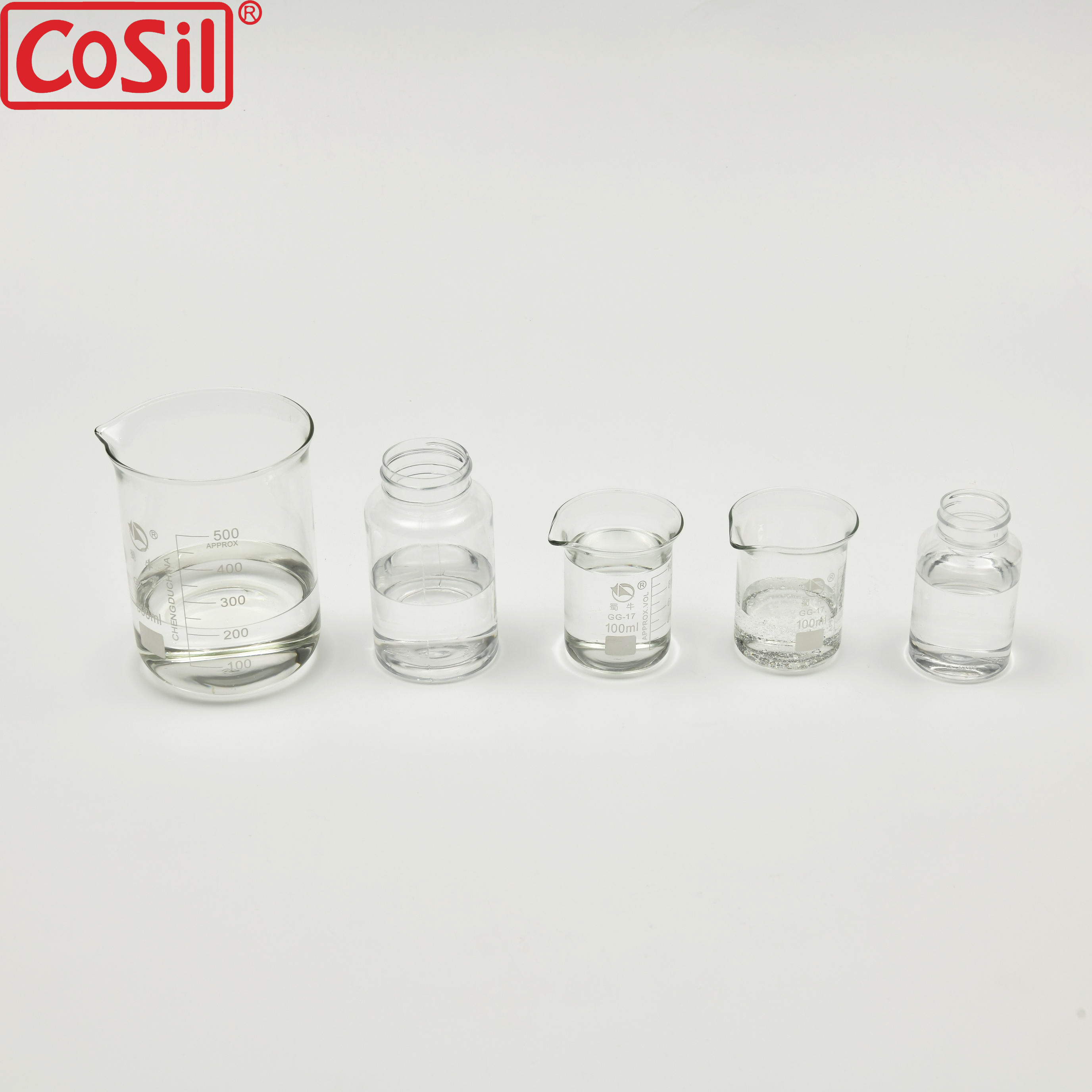
Optimizing Surface Finish: Viscosity, Coverage, and Compatibility with PU Systems
Viscosity governs how evenly a silicone release agent coats the mold and ultimately determines surface finish quality. If the viscosity is too high, the film fails to level, producing an orange peel texture; if it is too low, it sags on vertical surfaces, leaving flow lines and edge buildup. For polyurethane systems, optimal viscosity falls between 500 and 2000 centipoise: low enough for fine atomization during spraying, yet capable of building sufficient static viscosity to resist sagging. This rheological balance enables the agent to fill micro-irregularities without bridging fine details, acting as a final smoothing layer that delivers high-gloss, Class A surfaces straight from the mold. Matching viscosity to mold geometry has been shown to reduce surface roughness by over 30 percent.
Chemical compatibility with polyurethane is non-negotiable for preserving intricate mold features. Incompatible agents can inhibit cure kinetics, resulting in tacky surfaces that smear textures or distort thin walls. High-purity silicone release agents form inert, non-reactive barriers that prevent bonding without leaching contaminants. Their low surface energy ensures clean separation, even from micro-features as small as 0.1 millimeters, while uniform coverage across deep cavities and complex contours guarantees faithful reproduction of every detail. Proper pre-curing of the release film locks in protection, and the absence of reactive siloxanes safeguards against cure inhibition. Even under aggressive polyurethane formulations with high exotherm, a well-selected silicone agent maintains integrity, preventing thermal degradation from compromising surface quality.
Real-World Performance Validation: Efficiency Gains and Quality Metrics
A benchmarking study by the Society of Plastics Engineers found that switching to a silicone mold release agent reduced post-cure sanding time by 37 percent at a leading automotive trim manufacturer. Micro-adhesion defects, which previously required hand-sanding of complex curves, were eliminated, yielding consistent Class A surfaces directly from the mold. Operators reported faster and more predictable demolding, cutting abrasive finishing steps by nearly two-fifths and saving 22 labor hours per week per production line. These gains remained stable over a six-month validation period under high-volume urethane casting conditions.
While silicone release agents carry a higher per-cycle cost—approximately 18 cents more per cycle than conventional alternatives—the labor savings are substantial, saving 1.35 dollars per part in reduced sanding and rework. That yields a net gain of 1.17 dollars per cast, delivering full payback within the first 3000 cycles. Over a 12-month run of 80,000 units, this translates to 93,600 dollars in recovered labor costs alone. Factoring in lower abrasive consumption and fewer rejected parts, the five-year net present value exceeds 400,000 dollars, providing a strong economic justification for adoption in precision casting operations.
Frequently Asked Questions
-
What is the primary function of a silicone mold release agent? The main role of a silicone mold release agent is to prevent sticking and adhesion between polyurethane resins and mold surfaces, ensuring smooth demolding and protecting the integrity of both the mold and the manufactured part.
-
How does a silicone mold release agent create a low-energy barrier? A silicone mold release agent forms a thin, uniform monolayer through molecular adsorption, creating a low-energy interface with its non-polar methyl groups that reduce adhesion and prevent chemical bonding.
-
What is the optimal viscosity range for silicone release agents in polyurethane systems? The optimal viscosity for silicone release agents in polyurethane systems ranges between 500 and 2000 centipoise. This balance ensures fine atomization during spraying while resisting sagging on vertical mold surfaces.
-
Can silicone release agents handle high temperatures during molding? Yes, most silicone release agents maintain thermal stability up to 250 degrees Celsius, ensuring their structural integrity during high-temperature molding processes.
-
How do silicone mold release agents reduce labor costs? By preventing adhesion defects and micro-tearing, silicone mold release agents reduce the need for sanding, rework, and finishing steps, saving significant labor hours per production cycle.