EN
EN
 AR
AR
 FR
FR
 DE
DE
 IT
IT
 JA
JA
 KO
KO
 PT
PT
 RU
RU
 ES
ES


How Dimethyl Silicone Oil Viscosity Impacts Mold Release Performance
Release Efficiency and Surface Quality: The Viscosity–Film Uniformity Relationship
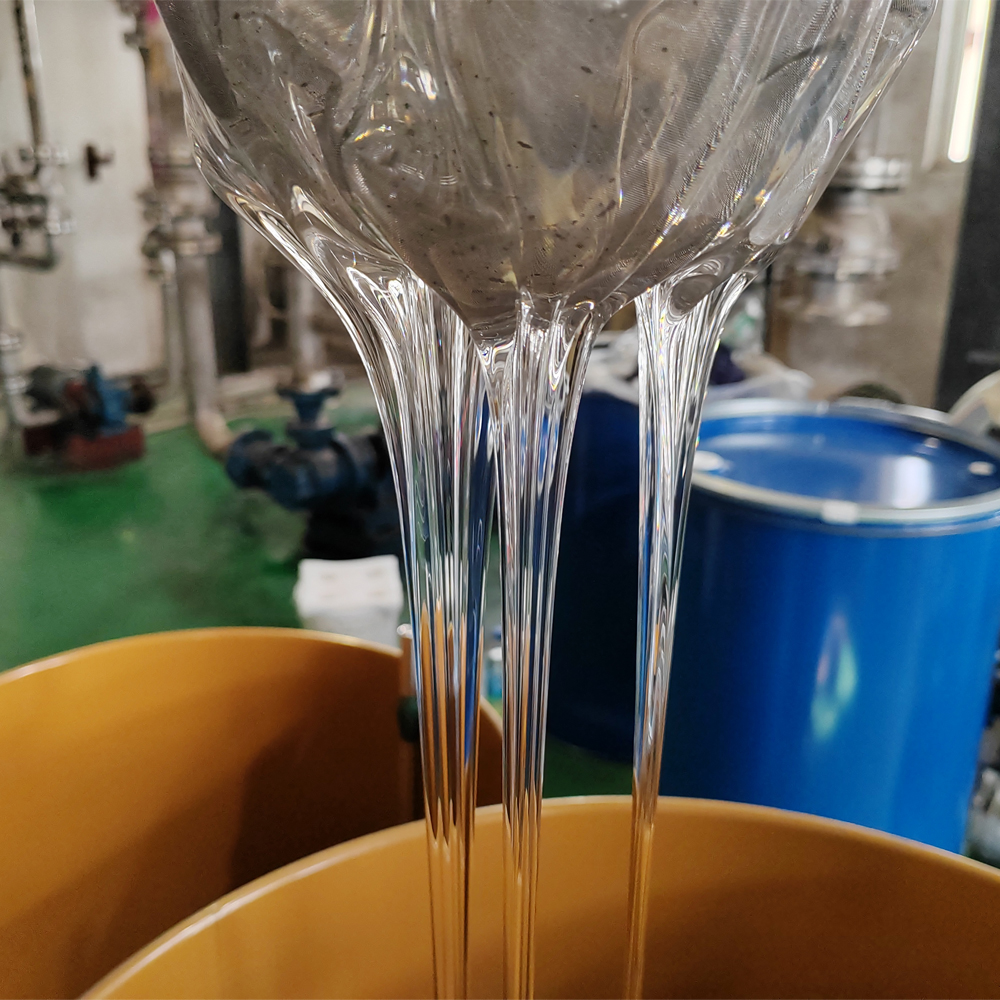
The viscosity of dimethyl silicone oil directly governs the uniformity—and thus the performance—of the release film. As a fluid’s resistance to flow, viscosity determines how completely and consistently the oil wets and spreads across the mold surface. Low-viscosity oils (e.g., 50 cSt) spread rapidly but risk forming a discontinuous, suboptimal film just 0.5–1 micron thick—too thin to prevent localized sticking or surface defects like drag marks and knit lines. Conversely, excessively high-viscosity oils (e.g., 1,000 cSt) resist spreading, leading to uneven coverage, pooling, and transfer of excess material onto the molded part—compromising paint adhesion, bonding, and dimensional accuracy.
The ideal release film is continuous, molecularly coherent, and precisely tuned: thick enough to block adhesion yet too thin to be mechanically disturbed during ejection. Surface energy analysis at leading materials institutes confirms that a uniform 1–2 micron film delivers superior release reliability compared to a disorganized 10-micron layer. Achieving this requires matching the oil’s cohesive strength to the mold’s surface energy—enabling self-leveling behavior and stable interfacial separation.
Demolding Force Reduction: Why Intermediate Viscosity Minimizes Adhesion and Residue
An intermediate viscosity range—100–350 cSt—delivers the optimal balance for minimizing demolding force and residue buildup. This grade forms a cohesive, shear-stable film that resists displacement under injection pressure while remaining fluid enough to separate cleanly from both mold and part.
Low-viscosity oils lack sufficient film strength: under thermoset injection pressures, they’re easily squeezed from the interface, causing metal-to-rubber contact and spiking peak ejection force. Switching from 50 cSt to 200 cSt dimethyl silicone oil has been shown to reduce required ejection force by up to 40%, significantly lowering micro-scratches and stress cracking in delicate components. At the high end, oils above 500 cSt form thick, mobile layers prone to hydraulic lock or gummy residue as polymer chains entangle and fracture—accumulating in mold crevices and increasing unplanned downtime. The Ponemon Institute (2023) estimates such residue-driven maintenance costs at $740/hour for high-volume lines. In contrast, the 100–350 cSt range ensures clean, low-force separation and extends cleaning intervals—enhancing both part quality and operational efficiency.
Matching Dimethyl Silicone Oil Viscosity to Substrate and Process Conditions
Low-Viscosity (10–100 cSt) Dimethyl Silicone Oil for High-Spreadability in Thermoplastic Injection Molds
Low-viscosity dimethyl silicone oil (10–100 cSt) excels where rapid, complete coverage is non-negotiable—particularly in high-speed thermoplastic injection molding. Its low molecular weight and minimal chain entanglement enable instant wetting and spreading over complex geometries, including fine textures and micro-details, without bridging or blurring surface features. With a surface tension of ~20–21 mN/m, it readily wets high-energy metal molds, reducing required dosage per cycle. Its volatility also supports fast evaporation or carry-off, minimizing post-mold residue and cleaning time—critical for maintaining high production yields. However, its limited thermal stability restricts use to mold temperatures below 150°C, where oxidative degradation remains negligible.
Medium-Viscosity (100–350 cSt) Dimethyl Silicone Oil for Balanced Coverage and Stability in Silicone Rubber Molding
Medium-viscosity dimethyl silicone oil (100–350 cSt) is the standard for silicone rubber molding, where uncured compound tackiness and high cavity-filling pressures demand both spreadability and film resilience. Longer polymer chains enhance mechanical cohesion, resisting washout during filling and maintaining consistent release performance across hundreds of cycles. This stability reduces part distortion, tearing, and surface marring—especially in thin-walled or intricate parts. Its improved thermal stability over lower-viscosity grades sustains film integrity at typical silicone cure temperatures (120–180°C). Crucially, it establishes an effective surface energy differential against low-energy cured silicone elastomers—preventing adhesion without leaving heavy residue that would interfere with secondary operations like adhesive bonding or overmolding.
High-Viscosity (500–5,000 cSt) Dimethyl Silicone Oil for Thermal Resilience in Rubber Vulcanization
High-viscosity dimethyl silicone oil (500–5,000 cSt) is engineered for the extreme conditions of rubber vulcanization—where mold temperatures frequently exceed 170°C and cure cycles last minutes to hours. Lower-viscosity oils volatilize or oxidize rapidly under these conditions; this grade’s high molecular weight delivers exceptional thermal resilience and shear resistance. It forms a tenacious, semi-durable film that withstands prolonged heat exposure and aggressive rubber flow, acting as both a release barrier and a protective shield against corrosive sulfur or antioxidant additives in the compound. Though its higher surface tension and slower spreading require precise application control, its extended reapplication interval—often thousands of cycles—significantly improves process uptime and reduces scrap rates, especially for large, thick-section rubber parts.
Practical Selection Framework for Dimethyl Silicone Oil Viscosity in Industrial Mold Release
Step 1: Assess Mold Surface Energy, Temperature Profile, and Cycle Frequency
Mold surface energy dictates wetting efficiency: high-energy bare-metal surfaces support rapid, uniform coverage with low-viscosity oils (10–50 cSt), whereas low-energy or PTFE-coated molds often require medium-viscosity grades (100–200 cSt) to ensure consistent film formation. Temperature must also be factored in—viscosity drops significantly with heat (e.g., a 100 cSt oil thins to ~30 cSt at 150°C), so selection should target adequate film thickness at peak operating temperature, not ambient. Finally, cycle frequency matters: high-speed thermoplastic processes benefit from low-viscosity oils that atomize quickly and coat fully without extending cycle time.
Step 2: Evaluate Trade-offs Between Film Persistence, Reapplication Interval, and Cleanliness
Higher-viscosity oils (500–1,000 cSt) maximize film persistence—extending reapplication intervals dramatically in vulcanization—but risk residue accumulation in textured or vented mold areas, potentially affecting part aesthetics and increasing cleaning frequency. Low-viscosity options minimize residue but demand more frequent application in continuous operations. A balanced, widely applicable solution is a 200–350 cSt oil paired with precision spray delivery: it provides reliable release across demanding cycles while maintaining acceptable mold cleanliness and part surface integrity.
Frequently Asked Questions
What is dimethyl silicone oil viscosity and why is it important?
Viscosity refers to a fluid's resistance to flow. Dimethyl silicone oil viscosity determines coverage uniformity, spreadability, and mold release performance, impacting outcomes like surface quality and demolding efficiency.
Which viscosity range should I choose for thermoplastic injection molding?
Low-viscosity oils (10–100 cSt) are ideal for thermoplastic injection molding due to their high spreadability and fast evaporation, especially when fine surface details are critical.
What viscosity performs best for silicone rubber molding?
Medium-viscosity oils (100–350 cSt) deliver balanced coverage and stability in silicone rubber molding, resisting washout while maintaining superior release performance over long cycles.
How do high-viscosity oils benefit rubber vulcanization processes?
High-viscosity oils (500–5,000 cSt) are excellent for rubber vulcanization, providing exceptional thermal resilience and extended reapplication intervals in high-temperature, high-pressure conditions.
Can I use the same viscosity oil for all mold types?
No, the ideal viscosity depends on mold surface energy, temperature conditions, and production cycle requirements. Selecting the right range ensures optimal release performance and cleanliness.
Table of Contents
- How Dimethyl Silicone Oil Viscosity Impacts Mold Release Performance
-
Matching Dimethyl Silicone Oil Viscosity to Substrate and Process Conditions
- Low-Viscosity (10–100 cSt) Dimethyl Silicone Oil for High-Spreadability in Thermoplastic Injection Molds
- Medium-Viscosity (100–350 cSt) Dimethyl Silicone Oil for Balanced Coverage and Stability in Silicone Rubber Molding
- High-Viscosity (500–5,000 cSt) Dimethyl Silicone Oil for Thermal Resilience in Rubber Vulcanization
- Practical Selection Framework for Dimethyl Silicone Oil Viscosity in Industrial Mold Release
-
Frequently Asked Questions
- What is dimethyl silicone oil viscosity and why is it important?
- Which viscosity range should I choose for thermoplastic injection molding?
- What viscosity performs best for silicone rubber molding?
- How do high-viscosity oils benefit rubber vulcanization processes?
- Can I use the same viscosity oil for all mold types?