EN
EN
 AR
AR
 FR
FR
 DE
DE
 IT
IT
 JA
JA
 KO
KO
 PT
PT
 RU
RU
 ES
ES


Why PDMS Viscosity Matters: Core Performance Trade-Offs Across Industries
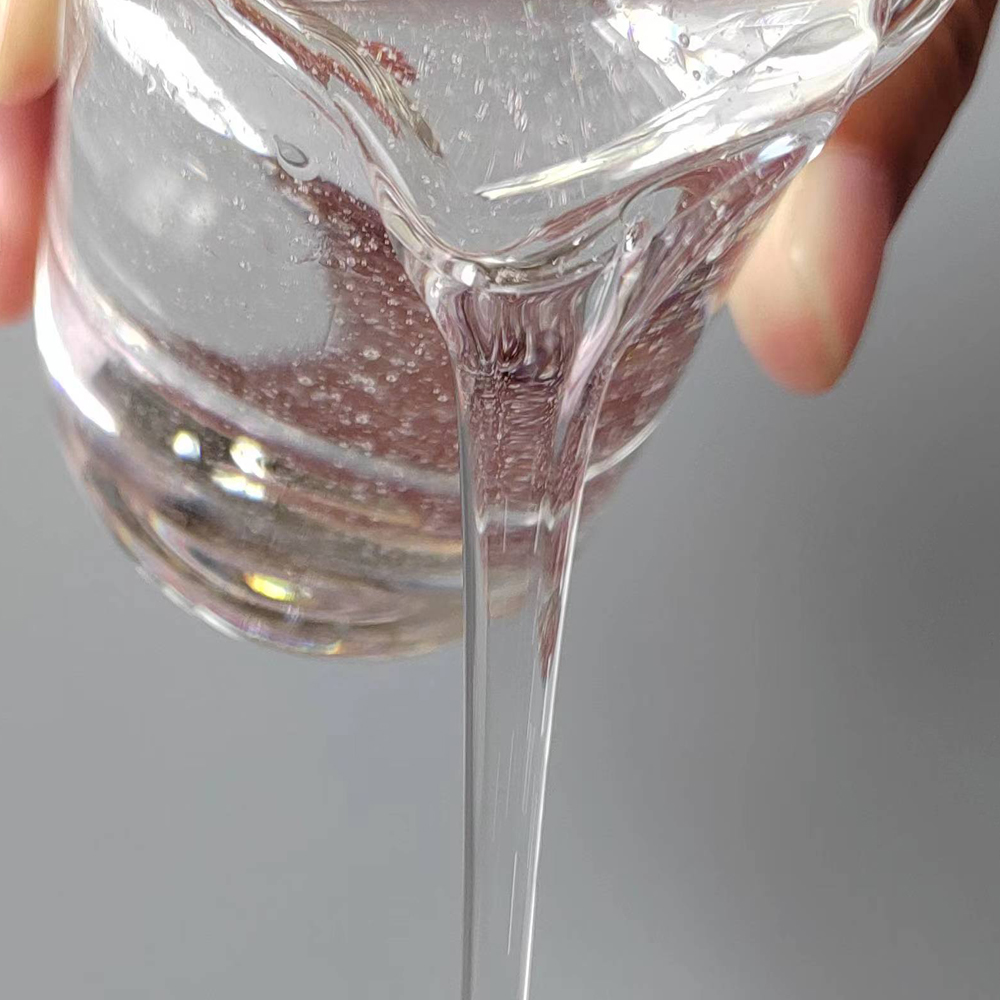
Polydimethylsiloxane (PDMS) viscosity is the primary parameter dictating its behavior in manufacturing processes. Low-viscosity fluids (10–100 cSt) spread rapidly and penetrate deeply into porous substrates—ideal for textile fiber treatments—but risk migration and limit achievable film thickness. High-viscosity PDMS (above 5,000 cSt) forms robust, stable films with excellent load-bearing capacity, making it preferred for electronics encapsulation and damping; however, its slow flow and tendency to trap bubbles can compromise precision coating. Medium-viscosity grades (350–1,000 cSt) strike a functional balance—offering sufficient flow for uniform coverage while enabling durable film formation for water repellency and conformal protection. The choice hinges on reconciling competing priorities: penetration depth versus film strength, cycle time versus defect rate. Even a 10% deviation from the target viscosity can shift coating uniformity by over 15% in spin-coating processes, per industry data (2023). Crucially, PDMS’s low viscosity–temperature coefficient ensures consistent rheological behavior across thermal processing conditions—from high-temperature electronics curing to textile drying—reinforcing its reliability as a process-critical material.
Optimizing PDMS Viscosity for Textile Applications
Selecting the correct PDMS viscosity is the primary lever engineers use to balance deep fiber protection with surface-level performance. Molecular weight governs flow behavior, determining whether the polymer wicks into microfiber interstices or forms a continuous surface film—a distinction that separates soft, breathable apparel from stiff, impermeable barriers.
Low-Viscosity PDMS (10–100 cSt) for Deep Fiber Penetration and Soft Hand-Feel
Low-viscosity PDMS excels where thorough wetting and minimal surface alteration are essential. Its small molecular size enables capillary-driven wicking into yarn interstices, encapsulating individual fibers without bridging them—preserving fabric flexibility and air permeability. This mechanism is critical for next-to-skin apparel requiring a natural “hand-feel.” In dip-coating trials on PET fabric, low-viscosity PDMS formed a uniform, wrinkle-free thin film that maintained breathability and drape, unlike high-viscosity alternatives that impart plastic-like stiffness. By internalizing functionality rather than layering it atop the surface, this grade delivers hydrophobicity without compromising tactile quality.
Medium-Viscosity PDMS (350–1,000 cSt) in Durable Water Repellency and Fabric Drape Enhancement
For durable water repellency (DWR), medium-viscosity PDMS delivers optimal surface film integrity and mechanical resilience. These grades form a cohesive, cross-linkable network on the fiber surface, lowering surface energy to promote water beading and roll-off. Research on cotton fabrics coated with 40 g/L PDMS confirmed significantly increased water contact angle (WCA) and reduced sliding angle (SA)—key markers of superhydrophobic performance. Unlike low-viscosity oils, this surface film resists abrasion and laundering, ensuring long-term protection. Strategically, this viscosity range also enhances drape by adding subtle internal lubricity and controlled mass, improving both hand-feel and functional longevity.
Selecting PDMS Viscosity for Electronics Manufacturing Processes
PDMS viscosity directly governs spreading, leveling, and bubble release during electronics fabrication. A mismatch risks non-uniform dielectric layers, void-induced partial discharge, or incomplete component coverage—undermining signal integrity and long-term reliability.
Spin-Coating and Inkjet Printing: Matching PDMS Viscosity to Film Uniformity and Resolution
In spin-coating, low-viscosity PDMS (10–100 cSt) flows readily under centrifugal force, yielding sub-micron films with <2% thickness variation—critical for planarizing interlayer dielectrics and maintaining consistent dielectric constant across chips. For inkjet printing, nozzle-compatible viscosity must remain near 8–15 cSt at operating temperature to prevent satellite droplets and printhead clogging. Slightly elevated viscosities (20–50 cSt) can improve edge definition in printed micro-lenses, provided the waveform is tuned to compensate for reduced jetting responsiveness. The core trade-off remains: too low, and ink spreads uncontrollably; too high, and jetting stability collapses.
Encapsulation and Conformal Coating: Balancing Flow, Bubble Release, and Cure Stability
Encapsulation requires medium-viscosity PDMS (350–1,000 cSt) capable of flowing beneath component leads while allowing entrapped air to escape before cure onset. A 500 cSt fluid, for example, typically releases bubbles within 10 minutes at 25°C—essential for eliminating partial discharge initiation sites in high-voltage IGBT modules. During thermal cycling, minimal shrinkage preserves adhesion and interfacial integrity. For conformal coating on complex PCBs, a slightly thixotropic 700 cSt PDMS builds a stable 50–100 µm layer without sagging on vertical surfaces, while retaining the rapid deaeration needed for high-throughput production.
FAQ
What is PDMS viscosity?
PDMS viscosity refers to the thickness or resistance to flow of polydimethylsiloxane and is a crucial factor in its behavior for different applications.
Why does PDMS viscosity matter for textiles?
PDMS viscosity affects its penetration into fibers, forming continuous films, which impacts softness, breathability, durability, and water repellency in textile applications.
How does PDMS viscosity affect electronics manufacturing?
In electronics, PDMS viscosity governs spreading, leveling, bubble release, and film uniformity to ensure reliable component encapsulation and conformal coatings.
What are low-viscosity PDMS applications?
Low-viscosity PDMS is ideal for textile fiber treatments and planarizing electronic interlayer dielectrics due to its fast flow and deep penetration.
What are medium-viscosity PDMS applications?
Medium-viscosity PDMS balances flow with durable film formation, making it suitable for durable water repellency in textiles and encapsulation in electronics.
What challenges arise with high-viscosity PDMS?
High-viscosity PDMS can form strong films but may have issues with bubble trapping and slower flow, affecting precision applications like electronics coating.