EN
EN
 AR
AR
 FR
FR
 DE
DE
 IT
IT
 JA
JA
 KO
KO
 PT
PT
 RU
RU
 ES
ES
Importance of Fast-Curing Liquid Silicone in Electronics Manufacturing
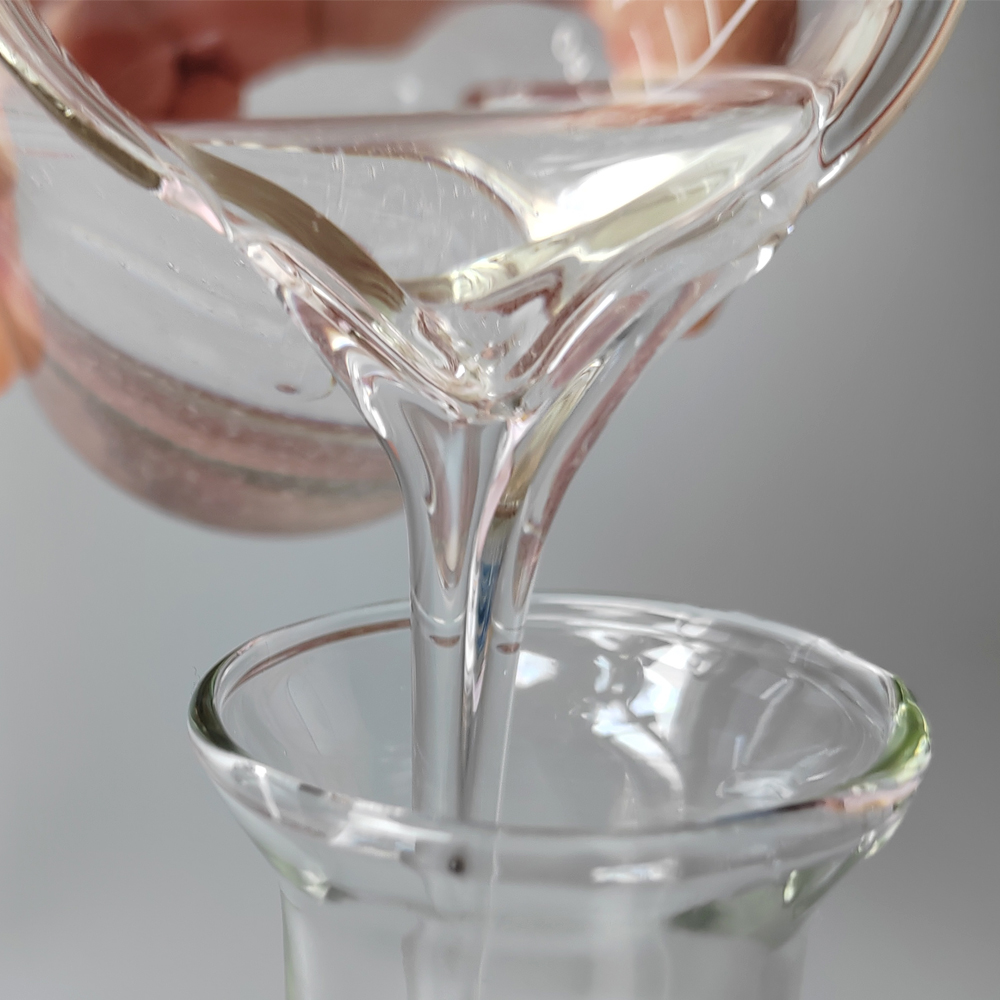
In order to keep up with demands in the electronics manufacturing industry, there is a constant need to balance the production of electronic components with their quality. Fast curing liquid silicone helps meet this challenge with a cure time of under 30 seconds, which is crucial on busy surface mount technology lines. While other materials such as urethane and epoxy can be prohibitively time-consuming in a manufacturing setting, fast curing liquid silicone allows for shorter cycle times. Furthermore, fast curing liquid silicone retains the same useful properties as traditional silicone. It is capable of withstanding extreme temperatures from -50 degrees Celsius to 200 degrees while also maintaining excellent insulating properties up to 18 kilovolts per millimeter. Fast curing silicone protects electronic components from thermal shock, moisture, and dirt during real world applications. Additionally, fast curing silicone has excellent flow properties and easily fills voids between and within electronic components. It is for these reasons that electronics manufacturers prioritize the use of fast curing liquid silicone in miniaturized applications such as wearable technology, automotive control systems, and Internet of Things (IoT) sensors.
Key Cure Chemistries in Liquid Silicone: Balancing Speed, Dependability, and Process Requirements
Moisture, UV, Addition, and Dual-Cure Mechanisms — Understanding Performance Trade-Offs
The curing process in liquid silicone affects production speed and durability in the end-use applications. For example, in medical grade silicone, end user applications where vapor contamination is a concern, and consumer electronics silicone, platinum-group catalyzed silicone addition systems are ideal. Post cure, they shrink only 0.1 - 0.2% and cure in minutes (2 - 5 minutes). Moisture cure silicones, on the other hand, utilize condensation cure chemistry (tin catalyzed moisture cure). Because of this, they take much longer to cure, and exhibit 0.3 - 0.5% shrinkage during cure. In addition, the release of acetic acid (from acetoxy moisture cure silicones) limits their use in sealed systems where temperatures change. UV cure elastomers only use light to cure, meaning that in inaccessible locations and complicated board designs, achieving complete cross-linking is difficult. This is why many companies have shifted to using dual cure systems.
By combining UV initiation with ambient moisture absorption or a final baking step, manufacturers benefit from both faster processing times and improved coverage over complex geometries.
Cure Mechanism Curing Method Advantages Limitations
Addition (Platinum) Heat-activated cross-linking Biocompatibility, low shrinkage, high temperature (up to 250°C) resistance More expensive materials; sensitivity to sulfur/amine contaminants
Condensation (Tin) Moisture-dependent More economical, thickness tolerance, ease of processing Releases acetic acid; slower curing; lower heat resistance (<200°C)
UV Light-initiated polymerization Curing times in seconds; energy efficiency; inline automated processing is possible Shadowing and opacity region limitations; must have an optically transparent substrate
Dual cure UV + moisture or UV + heat Geometry complexity; flexibility in processing mixed-component assemblies More complex formulations; increased viscosity; reduced shelf life
How Cure Kinetics Affect Shadow-Area Coverage, Depth of Cure, and SMT Line Throughput
Material cure speed is of utmost importance in real-life manufacturing scenarios. The process in condensation cure systems begin with the outer layer and progress to the center. This is problematic in situations with closely spaced components or deep cavities. For anyone working with conformal coatings over 1mm thick, this is a major issue. However, addition cure silicones provide a different alternative.
They form cross-links in all three dimensional volumes of the material, which results in improved dielectric performance and mechanical stability, even when encasing elements thicker than 10 mm. On the subject of production lines, UV curing systems most certainly reduce cycle times, sometimes even under 30 seconds. The only thing to look out for is the potential for the designer to create shadow areas in which UV light may not penetrate the material. There is no disputing that moisture assisted formulations improve dimensional stability. The downside is that these systems will typically slow the entire process down by 15% to 40% because they require a specific set of environmental conditions to function optimally. however, platinum-based formulations appear to be the exception. Their curing time of 2 to 5 minutes is perfectly aligned with the cycle time of most reflow ovens. The majority of users report that the materials meet, and in most cases exceed, the electrical performance requirements of the stated IPC-CC-830B. Just be careful with the temperature ramping. If it is too aggressive, the formation of bubbles is to be expected, and no one wants to handle a compromised moisture barrier.
Performance Requirements: Testing whether Liquid Silicone can provide protection in the real world
Thermal cycling, humidity resistance, and dielectric integrity per IPC-CC-830B
Conformal coatings used in coatings encounter extreme temperature cycling, ranging from -40 °C to 150 °C, and high humidity (85% relative humidity for 1,000 hours). These coatings must remain stretchable, good adhesion, and good dielectric. High purity Liquid Silicone is a dielectric that surpasses the IPC-CC-830B test requirements in Class A and Class B applications, for its dielectric strength is over 500 volts per mil, and its insulation resistance is greater than 10 to the 12th power (Ohm) after exposure to extreme temperature cycling and high humidity environments. Liquid Silicone excels in inhibiting electrochemical migration and dendrite growth in copper pathways. These qualities improve the reliability of electronic devices in harsh operating environments.
Adhesive properties with PCB substrates and vibration dampening without delamination
The adhesion of liquid silicone with FR-4, polyimide, solder masks, and metal coatings silicone polymers is highly water impervious and provides protection for the compounds inside the silicone layer from the most common and damaging field failures of electronics. When it comes to protective vibration encapsulation, silicone polymers are the best. They absorb and dissipate approximately 90% of the mechanical energy, in contrast to traditional rigid encapsulants, which are effective at dampening vibrations, absorbing and dissipating only about 50% of the mechanical energy. They do not delaminate, because of their flexible nature, even after many soldering cycles of 260 C, as well as increasing and decreasing temperature cycles. The silicone polymers also do not corrode the copper as many encapsulants do through their chemical reactions. They also do not leave residues as many other materials do, including low-wet solder.Liquid Silicone vs. Alternative Conformal Coatings: Speed Meets Silicone Superiority
Upsides and Downsides of Acrylics, Urethanes, Epoxies, and Parylene in High-Temperature or Rework-Sensitive Situations
Materials such as acrylic, urethane, epoxy, and parylene have their own sets of pros and cons, but they definitely do not cut it in the world of high speed and high reliability electronics manufacturing. As for acrylics, they start decomposing at around 125 degrees Celsius, and removing them from components is no walk in the park, as it involves the use of paints and MEK, which no one wants to deal with during rework. Urethanes are worse in the sense that they tend to crack at repeated heating cycles above 150C, and they just do not do well against moisture at all. Epoxies are unique in that they do have good resistance to chemicals, but in exchange for that, they are prone to embrittlement, which causes them to crack from vibration and makes them very difficult to repair at the component level without causing damage to the surrounding components. Then there is parylene. It looks good on paper because of its vapor deposition method, but that method is extremely slow, and simply does not meet the needs of production.
After coating is done, manufacturers have few options to deal with the shadow areas created by coating in tight pitch assemblies.
Speed, protection, and serviceability all converge using liquid silicone:
Property Liquid Silicone Alternatives (Acrylic/Urethane/Epoxy/Parylene)
Max Operating Temp >200°C 125–180°C
Reworkability Removal (thermal or mechanical) is solvent-free; easier to rework Harsh chemicals are required, with a risk of damage to the substrate
Dielectric Strength ≥18 kV/mm ≤15 kV/mm
Moisture Resistance <0.02% water absorption (per ASTM D570) Up to 3% absorption, accelerating corrosion
During thermal shock testing, it withstands −55°C to 150°C without cracking due to thermal shock test resistance. Its vicosity is superior to rigid epoxies, and is able to absorb vibration energy more effectively. Its rapid-cure formulations enable full processing in under 60 seconds, alleviating the bottleneck traditionalies imposed on modern SMT lines.
FAQ Section
What is fast-curing liquid silicone?
In electronics manufacturing, fast-curing liquid silicone is a synthetic material with rapid cure time and remarkable properties, including extreme temperature resistance and superior electrical insulation.
How does liquid silicone compare to traditional materials?
Liquid silicone, in contrast to conventional materials, provides rapid curing, resulting in shortened cycle durations, and due to its superior temperature resilience and dielectric strength, contains increased quality.
What are the main cure mechanisms for liquid silicone?
The main cure mechanisms are addition, condensation, UV, and dual-cure. Each has pros and cons, including speed, reliability, and coverage.
What advantages does fast curing liquid silicone offer to the manufacturing of electronics?
Fast curing liquid silicone speeds up production cycle, increases throughput, and creates quality modern electronics where reliability is critical to the design.
What advantages does liquid silicone have over other conformal coatings like acrylic or epoxy?
Compared to acrylic, epoxy, and urethane alternatives, liquid silicone has less moisture absorption and better reworkability without the use of harsh chemicals and better thermal stability, better dielectric strength, and better thermal stability.