EN
EN
 AR
AR
 FR
FR
 DE
DE
 IT
IT
 JA
JA
 KO
KO
 PT
PT
 RU
RU
 ES
ES
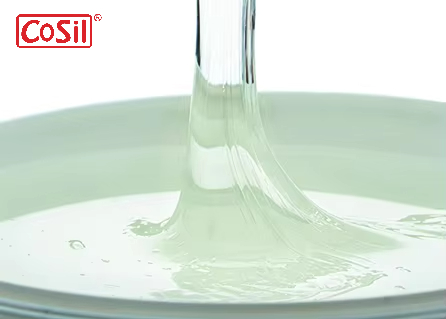
Many silicone rubber manufacturers struggle with slow vulcanization, uneven crosslinking, poor filler dispersion and declining physical properties after long-term use. Ordinary inert dimethyl silicone oil only works as a simple diluent, and it will migrate out of the rubber matrix over time, damaging product durability.
Vinyl silicone oil solves these common pain points perfectly. With reactive vinyl side chains, it takes part in platinum catalyzed hydrosilylation reactions chemically. It speeds up curing cycles, improves tensile and tear strength, optimizes high-silica compound processing, and cuts down the consumption of expensive platinum catalysts. This article explains the reaction principle, mechanical improvement, processing advantages and formula matching skills of vinyl silicone oil for VMQ and HCR silicone rubber production.
Faster Crosslinking Speed from Reactive Vinyl Functional Groups
The vinyl groups marked –CH=CH₂ on the molecular chain become active crosslinking points during hydrosilylation. When mixed with SiH crosslinkers inside VMQ rubber compounds, carbon double bonds trigger rapid addition polymerization.
Traditional non-reactive dimethyl oil cannot form chemical bonds in the vulcanization network. It only stretches molecular chains without stable crosslinking. By contrast, vinyl silicone oil joins the curing reaction directly. A polymer kinetics test completed in 2021 proved that the system containing 0.2 mol% vinyl silicone oil achieved 38% faster gelation than the system with inert silicone oil.
Terminal and pendant vinyl groups reduce the activation energy required for Si-C bond formation. To keep stable reaction speed and avoid excessive crosslinking, vinyl content must be strictly controlled between 0.1 mol% and 0.3 mol%. Even vinyl distribution ensures stable curing curves and greatly raises continuous production efficiency for silicone factories.
Platinum Catalyst Optimization for Addition Cure Systems
Platinum catalyst is the core of hydrosilylation curing. If vinyl functional groups are evenly distributed in the formula, trace platinum additives can complete clean crosslinking without generating extra byproducts.
Reaction selectivity makes temperature adjustment and inhibitor control much easier. When we replace part of inert diluent with vinyl silicone oil, platinum dosage can be reduced by up to 12% while keeping the same gel time, according to the 2023 rubber processing industry benchmark. Lower catalyst dosage effectively reduces raw material cost and prevents yellowing or post-vulcanization instability of finished rubber products.
Besides, uniformly dispersed vinyl sites lower premature scorch risk under high shear molding conditions. Manufacturers can run faster molding cycles while maintaining consistent product quality and production safety.
Better Mechanical Properties Based on Reactive Molecular Structure
Narrow Molecular Weight Distribution Creates Even Crosslink Network
Molecular weight distribution directly decides the homogeneity of crosslinking networks. Vinyl silicone oil with low polydispersity index makes vinyl groups evenly distributed on polymer chains, so crosslink density stays consistent everywhere after curing.
Wide molecular weight distribution will lead to irregular areas: some parts are over-crosslinked and brittle, while other areas are insufficiently cured. These defects form stress concentration points and cause early product breakage.
According to the research data published by Johnson in 2020, narrowing PDI value from 2.5 down to 1.5 improves tensile uniformity by 18%. Balanced reaction speed removes weak points inside silicone rubber, bringing higher breaking elongation, outstanding tear resistance and stable resilience. This performance is essential for medical silicone tubing, automotive dynamic sealing gaskets and other high-reliability products. Strict controlled polymerization ensures stable quality between different production batches.
Vinyl Silicone Oil Acts as Reactive Plasticizer Instead of Migratory Diluent
Conventional plasticizers only fill gaps between polymer chains to soften rubber. After long-term use, these additives will separate and migrate out, resulting in reduced hardness and poor durability.
Vinyl silicone oil works in a totally different way. Its vinyl groups connect into the three-dimensional crosslink structure through platinum catalyzed reactions. It permanently locks into the rubber matrix without bleeding.
This dual effect lowers the viscosity of uncured rubber for easier processing, and strengthens the vulcanized material at the same time. In HCR high consistency silicone rubber formulas, replacing inert processing oil with vinyl silicone oil can increase tear resistance by 30% without changing shore hardness (Chen, 2022).
For dynamic gaskets and sealing parts that bear repeated extrusion, reactive plasticization keeps long-term flexibility and mechanical integrity. Processing performance no longer needs to compromise product service life.
Improved Processing Performance for High Silica Filler Loaded Compounds
Reduced Viscosity Hysteresis During Kneading and Milling
Silica powder filler produces strong mutual attraction between particles. High filling VMQ rubber tends to suffer irreversible viscosity rising after long kneading, which increases power consumption and leads to uneven filler dispersion.
Vinyl silicone oil plays the role of temporary reactive plasticizer. Side vinyl groups wrap around silica powder surfaces and reduce particle flocculation during mixing. Most importantly, these active groups will take part in the subsequent hydrosilylation curing. Temporary plasticization will not reduce the hardness of finished vulcanized rubber.
Industry test data in 2022 shows that silicone compounds with vinyl silicone oil keep 15% to 20% lower Mooney viscosity after 24 hours aging compared with formulas using ordinary dimethyl oil. Less viscosity hysteresis brings smoother milling procedures, lower energy cost and well dispersed white carbon black. Rubber manufacturers can steadily produce high-performance silicone components in mass production.
Formula Compatibility with Methyl Vinyl Copolymer Base Rubber
Homogeneous crosslink network needs matched vinyl content between silicone oil and base polymer. We must keep vinyl concentration within 0.1 mol% to 0.3 mol%, so reactive sites spread uniformly in the whole rubber system.
Mismatched vinyl concentration will cause uneven curing. Areas with excessive vinyl turn brittle, and low vinyl zones stay undercured with weak mechanical strength. Matching the vinyl molecular structure of oil and base copolymer eliminates such fluctuation. The finished silicone rubber has consistent curing speed, uniform tensile strength and isotropic elongation.
Molecular level compatibility meets strict quality requirements of precision industrial parts, without extra formula modification or equipment adjustment.
Frequently Asked Questions
What is vinyl silicone oil mainly used for?
Vinyl silicone oil is widely applied in VMQ silicone rubber formulations. It accelerates crosslinking reactions, optimizes processing fluidity, enhances mechanical strength, and serves as a non-migratory reactive plasticizer.
Why do vinyl functional groups speed up vulcanization?
Reactive double bonds cut down the activation energy of hydrosilylation. Compared with non-functional silicone oil, vinyl silicone oil realizes faster gelation and higher crosslinking efficiency.
How does vinyl silicone oil improve rubber mechanical strength?
Narrow molecular weight distribution creates even crosslink density, which raises tensile strength, elongation and tear resistance. Moreover, it bonds firmly into the rubber network without migration.
Can vinyl silicone oil cut down overall production cost?
Yes. It reduces platinum catalyst dosage, relieves viscosity rising during mixing, shortens molding cycles and lowers energy consumption, so manufacturers effectively control production costs.